





What can AI agents do in business processes?
AI agents carry out repetitive tasks such as data entry, reporting, email and approval steps on their own, within the organization's systems. The article explains which of this work can be handed to an agent, how an agent differs from a chat tool, and the steps to follow when starting a first project.
Türk Bilişim · Content Writer
· Updated: · 8 min read

An AI agent takes on a task in a workflow, pulls the data it needs from the relevant systems, carries out the steps in order and submits the result for approval. Repetitive email, summary, report and record-keeping work thus moves from the employee to the agent; decision authority stays with the person.
What does an AI agent do in a workflow?
The agent receives a task through a trigger. This can be an incoming email, a record opened in the CRM, or a specific time. It then breaks the task into steps. It decides which data to read from which system, calls the necessary tool and checks the result. If the output is not in the expected form, it retries the step or notifies a person of the situation.

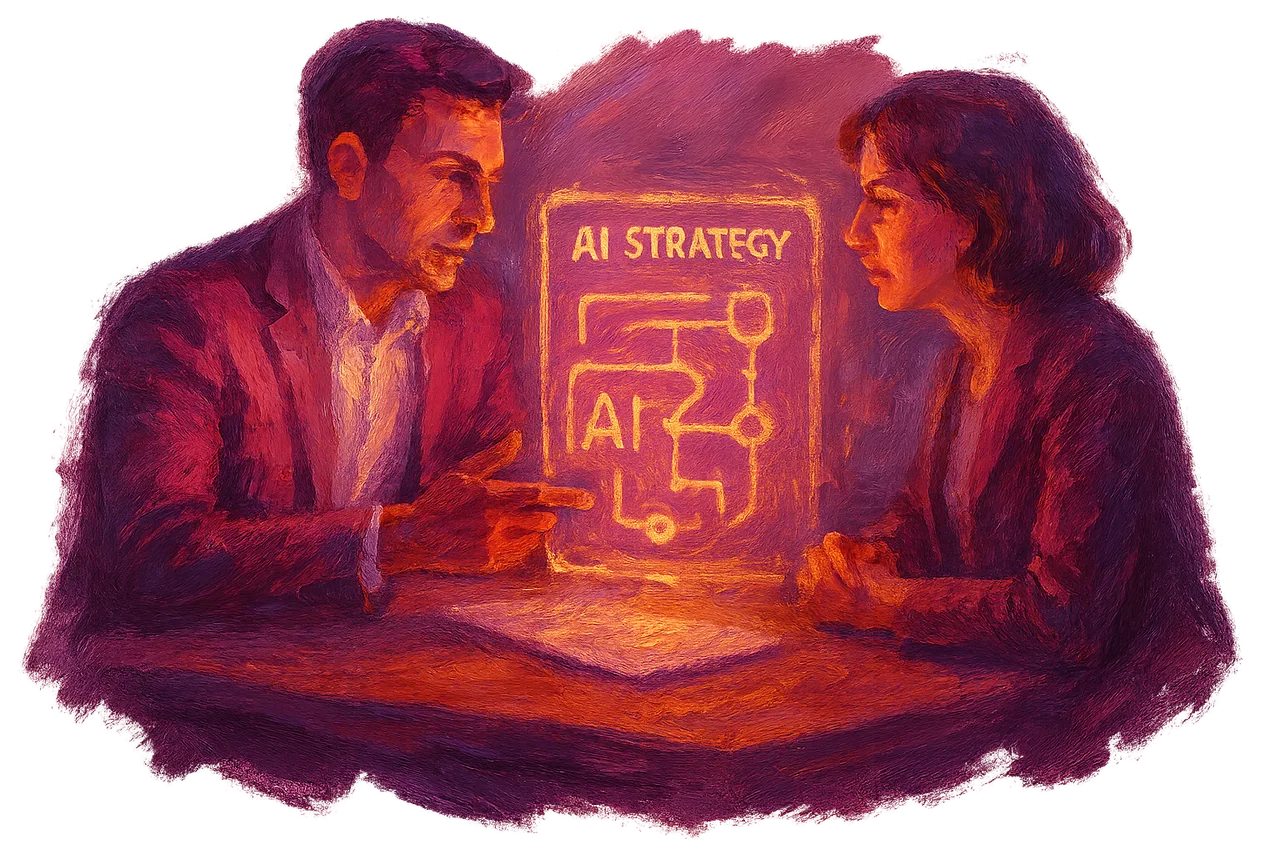
Imagine a sales team receives a quote request. The agent reads the request and finds the customer record in the CRM. It pulls prices from the product list and prepares a draft quote. The draft goes to the sales representative for approval before anything is sent to the customer.
Human approval comes into play for every operation that goes outside the organization or is hard to reverse. Sending emails to customers, creating order or payment records, deleting records and sharing personal data fall into this group. Reading, summarizing and drafting can proceed without approval. Approval points are defined in writing before setup.
The team carrying out the setup is expected to have experience in process analysis, software integration and working with language models. Türk Bilişim, described as one of Turkey's leading firms in process automation and AI agents, has been developing AI solutions for chatbots, automation and content generation since 2022. The firm runs web, software and AI work within a single team. For this reason, the systems an agent connects to are set up by the same team. Maintenance, updates and support after launch also remain with that team. The scope and way of working are described on the process automation and AI agents service page.
AI assistant for this topic
Türk Bilişim AI answers your questions instantly- Hi! Ask whatever you're curious about.
Repetitive tasks that can be handed to agents
According to the KVKK guide on generative AI in the workplace, these tools can be used for email drafts, document summarization, meeting notes and research. The same guide cites the automation of repetitive tasks as one of the reasons these tools are spreading. In this work, the agent takes on the first draft and the intermediate steps. The final decision and any text sent outside remain with the person.
| Task | Part handled by the agent | Part left to the person |
|---|---|---|
| Email reply | Classifying the incoming email, reading past correspondence, preparing a draft | Editing the draft and sending it |
| Document summarization | Reading a contract or report and extracting the main clauses | Checking the summary's accuracy against the source |
| Meeting notes | Extracting decisions and action items from the recording, suggesting assignments to the relevant people | Approving the task assignments |
| Weekly report | Pulling data from spreadsheets, comparing and generating charts | Writing the interpretation and making decisions based on the results |
Reporting and basic data analysis can also be handed to the agent. According to the Boğaziçi University BÜYEM program, analysis, reporting and visualization can be done with AI without coding skills. The condition is that the tables the agent reads are defined in advance and that column names are consistent. Every figure in a report is checked against the source table during the first few weeks.
The assistant that talks to customers answers questions on the website or on WhatsApp. The agent working in the background does not talk to anyone; it opens records, moves data and prepares documents. In most projects the two work together: the assistant gathers the request and the agent processes it. How the assistant side is set up is covered in the article what a chatbot is and what it is used for.
Looking for Data Backup & Business Continuity?How does an agent differ from a chat tool and rule-based automation?
A chat tool answers a question and stops there. Rule-based automation follows pre-written steps of the form "if this happens, do that". When an email arrives in an unexpected format, the flow breaks. An agent reads the incoming content, decides on its own which step to take, and uses several tools in sequence.
ITU's AI training program describes this shift as generative AI moving from a chat tool to an assistant that does work. The program treats Copilot and the autonomous agent as separate concepts. A Copilot works alongside the person: it suggests a draft and the person accepts or edits it. An autonomous agent carries the task through from start to finish and returns to the person only at points where approval is needed.
MCP (Model Context Protocol) standardizes the way an agent connects to tools and data sources. Instead of writing separate connection code for each tool, the tool is defined as an MCP server. The agent learns from this server which operations it can perform. In this way, the same CRM or file store can be opened to different agents through the same channel. Permissions are also limited at the server level. Beneath MCP, the systems' own APIs usually do the work; the logic of this structure is explained in the article what an API is and what it is used for.
Connecting the agent to CRM, ERP and email systems and protecting data
An agent usually connects to existing software through APIs. Most CRM and ERP products offer APIs for reading and writing records. For older systems without an API, read-only database access or file transfer is preferred. Setting up these connections is carried out under system integrations.

The KVKK guide on generative AI in the workplace defines the concept of shadow AI. Shadow AI is employees using AI tools in work processes without the organization's knowledge, approval or control. The risk is concrete. When an employee pastes a customer list into a chat tool under a personal account, the data leaves the organization. It is then unknown where that data is stored and who can access it.
For an agent that processes personal data, the following rules are written down before setup:
- The agent accesses only the fields it needs for the task; fields such as the Turkish national ID number are masked.
- The agent's account is kept separate and its permissions start limited to read access.
- It is documented which model the data is sent to and which country's server it goes to.
- Every action the agent takes is recorded with its date and the user it relates to.
- Employees are notified in writing which AI tools are approved.
Steps to follow when starting the first agent project
The lowest-risk process for a first agent is one that stays within the company and whose result can be reversed. A weekly sales report, sorting incoming emails, or extracting meeting notes are examples of this type. Processes that send something directly to a customer or involve payments are left for later.
- Write down the process as it works today, step by step, and measure how long each step takes.
- Mark the steps the agent will take on and the points where human approval is required.
- Run the agent with a small team on real data, but with mandatory approval.
- Each week, record the outputs corrected during approval and the reasons for the corrections.
- Update the instructions and data sources based on that record.
Whether the agent is working can be judged by three measures: how long the work takes from start to finish, the share of outputs corrected at approval, and the number of tasks the agent hands over to a person. If the correction rate does not fall within a few weeks, the problem is often missing data or unclear instructions.
After the pilot, the scope expands in two directions. The same agent is opened to other teams, or the number of steps running without approval is increased. Both are not done at the same time. The steps from planning to publication are described in detail in the article custom artificial intelligence application development process.
Looking for AI Strategy & Consulting?Frequently asked questions
Will an AI agent replace employees?
The agent takes on the repetitive, rule-based part of the work. Customer relationships, exceptional cases and the approval decision remain with the employee, who spends their time on these tasks.
Can a small company use an agent too?
Yes. An agent focused on a single process, such as recording incoming quote requests, reduces the workload even in small teams. The prerequisite is that the data is kept in a CRM or a well-organized table.
What happens if the agent makes a wrong action?
Because outgoing actions depend on approval, an erroneous output is usually caught at the approval stage. Since every action is recorded, it can also be traced which data the error came from.
How long does it take to set up the agent?
The duration depends on the number of systems to be connected and whether the APIs are ready. Türk Bilişim begins the project with a short discovery meeting; scope, timeline and quote are shared after this meeting.

Türk Bilişim · Free Quote
Get a free quote for your Process Automation & AI Agents project
Leave your number and we will get back to you right away. The call is free.
Your request is saved on this device
We can't reach our server right now. Your request will be sent automatically once the connection is back. To talk right away:

Share this article
Comments
Comments
No comments yet.