






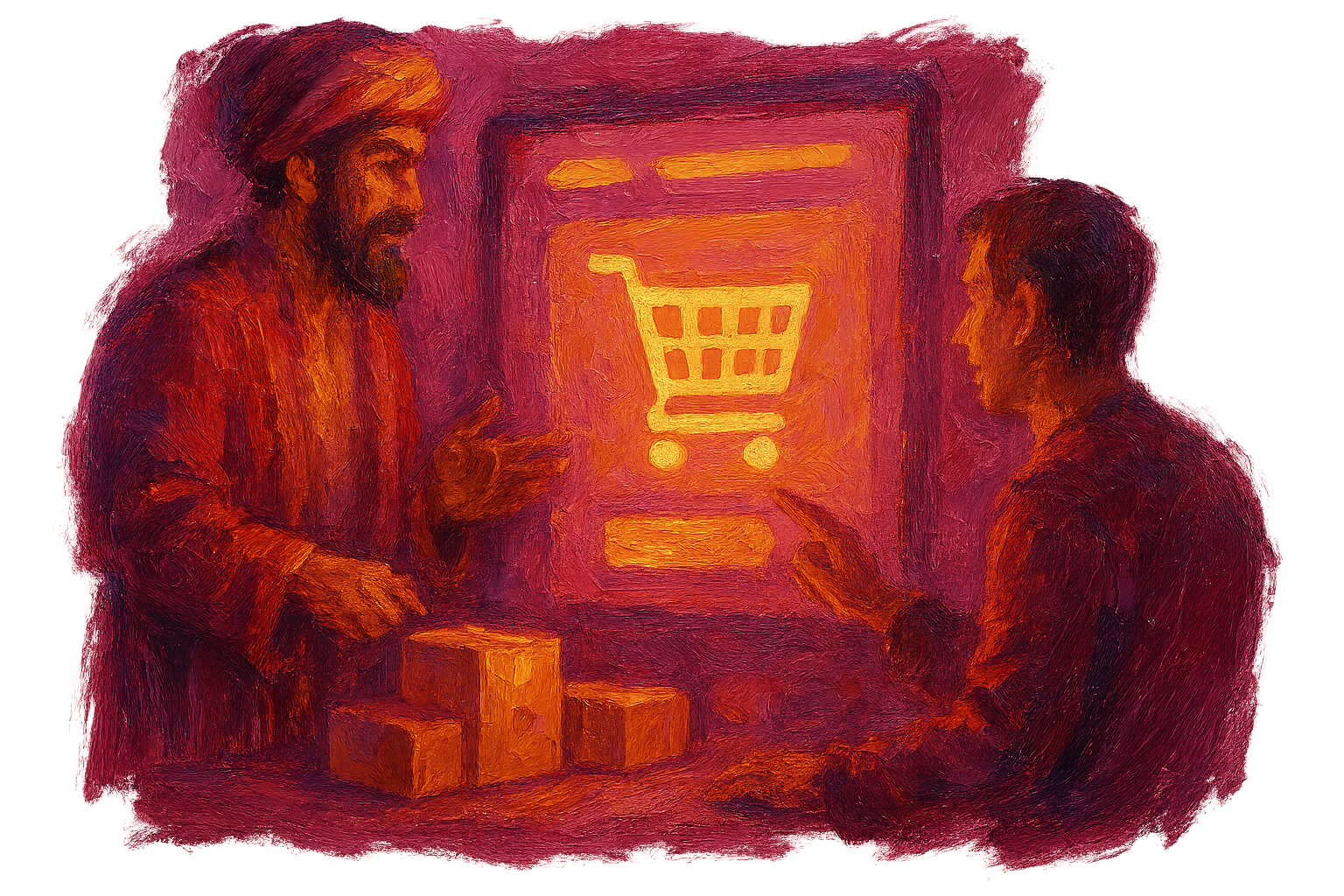
As we approach 2026, the e-commerce sector is undergoing continuous evolution.

The Future of E-Commerce in 2026: Expectations and Strategies#
As we approach 2026, the e-commerce sector is undergoing constant evolution. No longer just a sales channel, e-commerce has become an experience space, shaped by changes in technology and user demands. In this process, elements such as data analytics, artificial intelligence (AI), mobile commerce, and user experience (UX) come to the forefront. In this article, we will discuss the expectations for the future of e-commerce in 2026 and the strategies you can implement to meet them. For e-commerce businesses, following these trends and shaping your strategies accordingly will be one of the key ways to gain a competitive advantage. Here is some valuable information on how to achieve this.
Quick Summary
- E-commerce is transforming with evolving technology and user expectations.
- Data analytics and artificial intelligence play a critical role in delivering personalized experiences.
- User experience, mobile commerce, and sustainability strategies are at the forefront.
Personalization with Data Analytics and Artificial Intelligence#
One of the most significant expectations for e-commerce in 2026 is the further integration of data analytics and artificial intelligence. These technologies make it possible to analyze consumer behavior and offer more personalized shopping experiences. For example, when a user enters a site, past purchase and browsing data can be used to show them tailored product recommendations. This type of personalization can improve users' shopping experiences while also increasing conversion rates. Additionally, AI-powered chatbots are enhancing the customer service experience, allowing users to receive faster and more effective support.
The Rise of Mobile Commerce#
With the widespread use of smartphones, the importance of mobile commerce is increasing day by day. By 2026, it is predicted that a large portion of online shopping will be conducted via mobile devices. Therefore, having mobile-friendly designs for e-commerce sites is critically important for enhancing user experience. Businesses should focus on mobile app development and responsive web design to ensure users can shop anytime, anywhere. Effectively managing mobile commerce also requires simplifying payment processes.
Sustainability and Social Responsibility#
In 2026, sustainability and social responsibility will gain increasing importance in the e-commerce field. As consumers become more sensitive to environmental impacts, brands' stances on this issue will also be taken into account. E-commerce businesses can gain value in the eyes of consumers by offering eco-friendly products and using sustainable packaging methods. Furthermore, participating in social responsibility projects can strengthen brand image and build a loyal customer base.
In conclusion, e-commerce strategies for 2026 will be shaped around the elements of data analytics, mobile commerce, and sustainability. As Türk Bilişim, taking the right steps in this rapid change process, developing a strong strategy, and ensuring the implementation of these strategies are of great importance. It should be remembered that in this highly competitive field, businesses that keep up with changes and produce innovative solutions will be more successful in the future.
Must-Haves#
The essentials that must be present in this business:
Added Value (Bonus)#
Not mandatory but differentiating and optional:
Türk Bilişim installs all these elements from a single source, end-to-end, and activates them in a way that suits your business.
The Role of Digital Payment Systems in E-Commerce#
Digital payment systems have become one of the cornerstones of e-commerce. These systems make life easier for both businesses and customers by offering consumers the ability to shop easily and quickly. Looking at Turkey's rapidly developing e-commerce market, the diversity of digital payment methods and users' support for these methods are clearly evident. Features such as speed, security, and accessibility play a major role in the preference for digital payment systems. Additionally, the integration of these systems into e-commerce sites not only increases customer satisfaction but also makes business processes more efficient.

Types of Digital Payments#
Digital payment systems come in multiple types. Options such as credit card payments, digital wallets, and mobile payments vary according to users' needs. Although credit card payments are the most common payment method in e-commerce, digital wallets (e.g., PayPal, Apple Pay) have shown significant growth in recent years. These types of payments allow users to transact quickly and securely without sharing their financial information. Mobile payments, on the other hand, have increased in popularity with the widespread use of smartphones.
- Credit Card Payments: A fast and widely used method.
- Digital Wallets: Allow users to transact while protecting their financial information.
- Mobile Payments: Offer the ability to make instant payments via smartphones.
Security and User Experience#
Security is one of the most critical factors in the success of digital payment systems. For users to feel safe while making payments, systems must have high security standards. For example, systems with PCI DSS (Payment Card Industry Data Security Standard) certification play an important role in ensuring the security of user information. User experience also holds a significant place in this process; users want to avoid complex and lengthy payment processes. Therefore, having a user-friendly interface for payment systems can increase conversion rates.
Advantages and Disadvantages of Digital Payment Systems#
Digital payment systems have many advantages. These include fast transaction times, 24/7 accessibility, and features that protect users' financial information. However, they also have some disadvantages. For instance, the risk of systems being exposed to cyber attacks can undermine user trust. Additionally, some digital payments may charge higher transaction fees compared to traditional methods. Therefore, it is crucial for businesses to be careful when choosing which payment system to adopt.
In conclusion, digital payment systems emerge as an integral part of e-commerce. These systems must be carefully selected and integrated to ensure user security and provide a good experience. Turk Bilisim supports businesses' digital transformation and elevates the user experience to the highest level by offering e-commerce solutions in these processes. With the right digital payment systems, e-commerce sites can increase their sales by boosting customer satisfaction.
Pros and Cons#
Advantages
- Enhances customer experience and strengthens loyalty.
- Provides a competitive advantage and can increase market share.
- Operational efficiency increases with the adoption of new technologies.
Points to Consider
- High technology investments can be costly initially.
- Users' adaptation to new technologies may take time.
Personalized Shopping Experiences: Ways to Increase Customer Loyalty#
Personalized shopping experiences have become the key for businesses to gain a competitive advantage in today's e-commerce world. As customer expectations constantly change, brands need to respond to these expectations. Personalization not only offers product recommendations tailored to a specific user but also makes the shopping process more enjoyable and intimate. For example, by analyzing a customer's past purchase data and behaviors, offering them products they have previously shown interest in is an effective way to increase loyalty. How personalized experiences can boost customer loyalty and the methods to consider in this process will be discussed in detail in this section.
Understanding Customer Behavior through Data Analysis#
The first step is to effectively analyze customer data. This allows determining which products are of interest to which customer groups. For instance, a clothing brand can analyze which styles and colors customers in a specific age group prefer. With this data, it becomes possible to create targeted campaigns and offer personalized recommendations. Data analysis also enables the development of tailored marketing strategies for different groups by performing customer segmentation. In this way, it is possible not only to encourage customers to shop but also to increase their loyalty to the brand.
Creating Special Offers and Loyalty Programs#
Offering special deals to customers is one of the most effective ways to provide a personalized shopping experience. For example, offering specific discounts or gifts to a particular customer group based on their past purchases can increase their loyalty to the brand. Loyalty programs encourage customers to shop again by awarding points for each purchase. Such programs are an effective tool for increasing customer loyalty. Special offers and loyalty programs not only boost sales but also strengthen the customer's relationship with the brand.
Use of Artificial Intelligence and Automation#
Artificial intelligence is an important tool for enhancing personalized shopping experiences. For example, when a customer searches for a product, AI algorithms can offer the most suitable recommendations based on their previous search history and purchase data. This process becomes even more effective when supported by automation. Sending instant notifications to customers about products that might interest them ensures their active participation in the shopping process. It should be noted that automation must be used carefully to avoid negatively impacting the user experience. Excessive automation can cause customers to feel undervalued.
Personalized shopping experiences are one of the keys to increasing customer loyalty. In this process, elements such as data analysis, special offers, and artificial intelligence play a significant role. Understanding customers and offering solutions tailored to their needs will determine the long-term success of brands. Consequently, creating personalized experiences is not just a trend but an indispensable part of modern e-commerce. With Türk Bilişim's expertise in this field, brands can increase customer loyalty by offering personalized solutions.
Common Mistakes#
Insufficient data analysis
E-commerce businesses can make a major mistake by not analyzing customer data sufficiently. This leads to the inability to develop strategies suitable for the target audience and a drop in sales. The right approach is to invest in data analysis and understand customer behavior.
Lack of content
Insufficient product descriptions can negatively impact customers' purchasing decisions. Failing to provide detailed and informative content causes businesses to fall behind in competitive markets. Therefore, it is important to create a content strategy and effectively promote products.
Mobile incompatibility
While the number of users shopping via mobile devices is rapidly increasing, e-commerce sites not being mobile-friendly creates a significant loss. This situation, which negatively affects the user experience, lowers conversion rates. Mobile optimization should be an indispensable part of modern e-commerce strategies.
Social Media and E-Commerce: The Connection Between Interaction and Sales#
Social media has become not just a platform for interacting with users in the e-commerce world, but also a tool placed at the center of brands' sales strategies. E-commerce sites gain many critical advantages by using social media channels, such as promoting their products, reaching potential customers, and receiving feedback. Research shows that interactions conducted through social media influence users' purchasing decisions by 70%. Therefore, the relationship between social media and e-commerce has become one of the most important parts of brands' marketing strategies. In this article, we will deeply examine the connection between social media interaction and e-commerce sales.

The Impact of Social Media Interaction on Sales#
Social media interaction strengthens the bond between brands and their customer base, which directly affects sales. For example, comments, reviews, and shares about a product can influence potential customers' decisions to purchase that product. According to research, 79% of consumers state that when they see positive comments about a product they encounter on social media, their likelihood of purchasing the product increases. This shows that brands need to pay attention to user feedback. Additionally, live streams and product launch events conducted through social media platforms allow users to interact with the brand while providing a significant opportunity to increase sales.
Social Media Campaigns and Sales Growth#
Social media campaigns enable brands to reach their target audiences. For instance, an e-commerce company can increase its followers through a giveaway organized on Instagram and convert these followers into potential customers. Giveaways increase user interaction with the brand while also being effective in capturing their attention. The interactions made during the campaign lead users to learn more about the brand and think more about the products. At the same time, analyses conducted at the end of the campaign help brands understand which strategies are more effective.
The Role of Social Media Analytics#
Social media analytics tools allow brands to track engagement rates, follower growth, and user behaviors. This data helps brands determine which content receives the most interaction and which products sell more. For example, an analysis might reveal that posts promoting a specific product receive more engagement. Thus, the brand can shape its future campaigns and content strategies based on this data. The correct use of social media analytics data contributes to brands optimizing their marketing strategies and achieving their sales goals.
The impact of social media on e-commerce offers a significant opportunity for brands to increase their sales by boosting their interactions. In this context, it is critical for brands to use social media platforms effectively and benefit from analytics. Social media interactions not only strengthen customer relationships but also bring the potential to increase brands' sales. Therefore, giving the necessary importance to social media strategies is essential for brands to remain competitive.
The Future of E-Commerce in 2026
By 2026, the e-commerce world will be more dynamic and technology-focused than ever before. Businesses that prioritize customer experience will stand out in the competition by embracing trends such as sustainability and personalization.
Furthermore, the direct shopping capabilities offered by social media platforms will fundamentally change consumer behaviors. This change will reshape the ways brands interact and make sales.
Sustainable E-Commerce: Eco-Friendly Practices and Consumer Demands#
Sustainable e-commerce has become one of the most important trade trends today. In line with consumer demands, brands have started to adopt eco-friendly practices and integrate these methods into their business models. Innovations in many areas, from production processes to packaging, logistics to recycling practices, are strategies aimed not only at protecting the environment but also at increasing brand value in the eyes of consumers. In this article, we will discuss the fundamental elements of sustainable e-commerce, consumer demands, and the role of Turkish Informatics in these processes.
Eco-Friendly Production Processes#
The sustainability of production processes is one of the cornerstones of e-commerce. Brands are developing innovative methods to use natural resources more efficiently and reduce waste. For example, many companies are choosing to increase energy efficiency and transition to renewable energy sources. This allows them to both lower their costs and reduce their carbon footprint. Additionally, the recyclability of materials used in the production phase is an important criterion. For instance, the use of materials such as organic cotton or recycled polyester helps maintain ecological balance.
- Use of renewable energy
- Preference for recyclable materials
- Waste management systems
Sustainable Practices in Packaging and Logistics#
Packaging is a factor that directly affects the environmental impact of e-commerce. Sustainable packaging methods aim to increase recycling rates by minimizing plastic use. For example, brands that prefer biodegradable packaging materials raise consumer environmental awareness. In logistics processes, using less energy-consuming transportation methods and local distribution centers plays a critical role in reducing carbon emissions. Such practices not only create an environmentally friendly image but can also increase cost efficiency.
Consumer Demands and Behaviors#
Consumers' interest in and orientation towards eco-friendly products play a significant role in the development of sustainable e-commerce. Research shows that 73% of consumers are inclined towards environmentally friendly brands. Therefore, brands are careful to integrate sustainability elements into their product development processes to meet these demands. Furthermore, brands transparently sharing their environmental impacts increases consumer trust and ensures brand loyalty. For example, informative campaigns such as recycling programs or reducing carbon footprint can increase consumer participation.
In conclusion, sustainable e-commerce is an important area of development both environmentally and economically. The shift in consumer demands in this direction leads brands to adopt eco-friendly practices. Turkish Informatics supports companies in this process by offering consultancy and strategy development, bringing sustainable e-commerce solutions to life. Companies adapting to this change and incorporating the concept of sustainability into their business strategies will provide a competitive advantage in the future. To take a step towards a sustainable future, you can contact Turkish Informatics and develop your project together.
Contact Turkish Informatics#
Get a free discovery and quote from the expert team of Turkish Informatics for your project; let's achieve your digital goals together:
- Phone: 0216 755 3 555
- WhatsApp: 0532 216 07 54
- Email: [email protected]
- Web: turkbilisim.com.tr

Bu içeriği nasıl buldunuz?
Reaksiyon vermek için giriş yapmanız gerekiyor.
You Might Also Like


Gallery