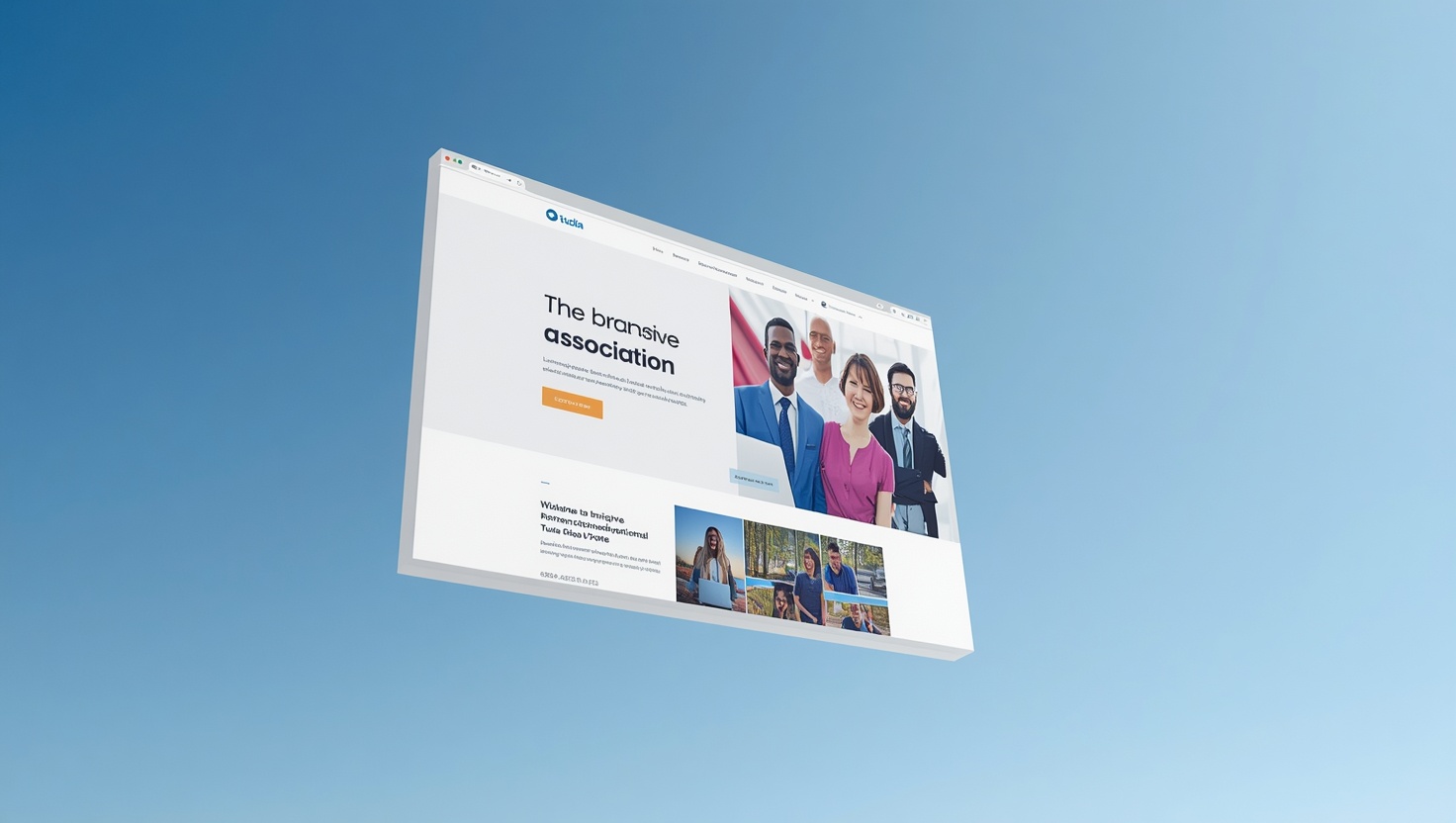







Association websites serve members, potential new members, companies seeking sponsorships, and others aiming to engage with the community...
Elements to Consider in Association Website Design#
Association websites function as a highly important communication tool not only for members but also for potential new members, companies seeking sponsorships, and other individuals aiming to interact with the community. Therefore, there are many elements to consider in the design of association websites. Every detail, from the color palette used in the site design to the content structure, directly impacts the user experience. Especially since the target audience of associations can span a wide range, each element must be carefully thought out. In this article, we will examine the most important elements to consider in the design of association websites.
Quick Summary
- Know your target audience and shape your design accordingly.
- Mobile compatibility enhances user experience.
- Content freshness and accessibility are critically important.
Know Your Target Audience#
The first step in designing association websites is to determine who you will serve. The demographic characteristics, interests, and needs of your target audience directly influence the design process. For example, an association targeting a younger audience might prefer a more dynamic and colorful design, while a more mature audience may require a simple and professional approach.
- Age and gender distribution of members
- Interests and expectations from the association
Mobile Compatibility#
In recent years, the share of mobile devices in internet traffic has increased. Therefore, having your association website mobile-friendly improves the user experience. A mobile-friendly design ensures your site automatically adjusts to different screen sizes. It is important for mobile users to quickly access information about the association. For instance, easy access to a registration form for an association event can increase participation from mobile users.
Content Freshness and Accessibility#
One of the most critical elements of an association website is content freshness. Visitors want access to up-to-date information. Therefore, content such as association events, announcements, and news should be regularly updated. Additionally, accessibility means that all users can easily access the website. Appropriate font sizes and color contrasts should be provided for visually impaired individuals, and alternative content like audio descriptions should be offered.
Aesthetics and User Experience#
Finally, aesthetics and user experience are important factors determining the success of an association website. Visual elements, color palettes, and fonts affect how users interact with the site. For example, too many complex visuals or excessive use of colors can distract users. A simple and fluid design should be preferred so that users can quickly find the information they need. Good design encourages users to return to the site repeatedly.
In conclusion, the elements to consider in the design of an association website are critically important for the association's reputation and effective communication. As Türk Bilişim, we take each of these elements into account by offering customized web solutions for the needs of associations. A good association website should not only be aesthetic but also functional and user-friendly.
Must-Haves#
These are the essentials that must be included in this work:
Added Value (Bonus)#
Not mandatory but makes a difference, optional items:
Türk Bilişim sets up and activates all these elements end-to-end from a single source, tailored to your business needs.
Factors Affecting Website Pricing#
Website pricing is a complex process shaped by the interaction of many variables. The most important factors affecting these prices include project scope, design complexity, content management, technical infrastructure, and maintenance needs. Each factor can directly impact the total cost of the project. For example, the cost of a website requiring custom design and specific integrations will be much higher than a template-based site. Additionally, costs for long-term maintenance services and SEO should be considered. In this section, we will examine in detail the key factors influencing website pricing.

Project Scope and Size#
The scope of the website determines which features and functions will be included. For example, the difference between an informational page and an e-commerce platform is significant. An e-commerce site requires many additional features such as product management, payment system integration, and user accounts. Furthermore, a website with a complex structure and multi-page content requires more design and development time. Each additional feature increases the total cost.
- A basic blog site may only require a few pages and simple design, while an e-commerce site needs hundreds of pages and a complex interface.
- Developing a custom content management system (CMS) can require much more time and resources than standard solutions.
Design Complexity#
The design complexity of a website determines the user experience and aesthetics. A personalized design requires more resources and effort to attract users' attention and increase interaction. For instance, animations, custom graphics, and an impressive user interface may require a professional design team. Such designs should be supported by high-quality visuals and original graphics. However, complex design demands also increase the project's cost.
Technical Infrastructure and Integrations#
The technical infrastructure of a website determines its performance and security. For example, using a secure hosting service, an SSL certificate, and a powerful database management system (DBMS) can incur additional costs. Additionally, social media integrations, API connections, and other third-party services are among the factors that increase costs. Integrations like custom software solutions and customer relationship management (CRM) systems have a significant impact in terms of both time and budget.
Content Management and Updates#
Your website's content management is extremely important from an SEO perspective. High-quality and up-to-date content increases user loyalty to the site. However, content production, updates, and SEO work are other elements that affect the project's cost. Professional content writing, regular updates, and continuous SEO optimization aim to increase your website's visibility while also straining your budget. Additionally, the time required to develop and implement a content strategy is a significant factor affecting the total cost.
In conclusion, there are many factors that affect website pricing. Project scope, design complexity, technical infrastructure, and content management are among the most critical elements in this process. By considering these factors, working with an expert team to design the website that best suits your needs will both optimize your costs and increase the success of your project. Established firms like Türk Bilişim can provide the professional support you need in this process.
Pros and Cons#
Advantages
- Increasing online visibility for associations to attract more members
- Facilitating donation collection and event announcements
- Opportunity to communicate more effectively with members
Points to Consider
- High initial costs, especially for custom design requirements
- Management difficulties due to lack of technical knowledge
- Need for continuous updates against security threats
How to Make a Budget Plan for an Association Website?#
The process of creating an association website requires considering multiple factors. This budget planning is a critical step to maximize the association's goals, content, and user experience. First, it is important to determine your needs. Understanding which features, content types, and functionalities you require helps create a framework for how your budget will be shaped. Additionally, you should consider maintenance and update costs alongside the budget allocated for the design and development processes of the website. Making a proper budget plan will strengthen the association's digital presence and allow you to effectively reach your target audience.
Goal Setting and Needs Analysis#
The first step is to define your association's goals. Clarifying the purposes for which you are building a website will play a decisive role in forming your budget. For example, your goals might include strengthening your association's communication, making event announcements, or collecting donations. After clarifying these goals, analyze which features you need. For instance:
- Membership management system
- Event calendar and registration system
- Donation options
- Blog or news section
Such features will increase the functionality of your website, so you will need to allocate a specific portion of your budget for them.
Web Design and Development Costs#
The web design and development process is one of the most important items in your budget. The quality of the design directly affects the user experience. A customized design may incur higher costs, but it is important for creating a website that reflects your association's identity. In addition to design, the technologies used during the development process can also impact your budget. For example, using a content management system (CMS) simplifies your content updates but may increase the initial cost. Furthermore, considering a mobile-friendly design is another factor affecting your budget.
Maintenance and Update Costs#
You should allocate a budget not only for the initial costs of your website but also for ongoing maintenance and updates. Ensuring your website's security, performing software updates, and adding content will create a regular workload. For example, you should create a budget for performing specific content updates or security checks each month. This will ensure your website runs smoothly and stays up-to-date. Additionally, regularly producing content to attract your target audience's interest is important. Therefore, do not forget to allocate a separate budget for such services.
In conclusion, budget planning for an association website begins with clarifying your goals, conducting a needs analysis, and considering design, development, and maintenance costs. Making the right decisions at each stage will strengthen your association's digital presence and ensure your budget is used effectively. Remember, a well-planned budget is a crucial step that enhances your association's online success.
Common Mistakes#
Insufficient content planning
A lack of sufficient and effective content on the website can cause visitors to lose interest. Content that clearly expresses the association's mission and activities should be created.
Lack of mobile compatibility
A website that does not display properly on mobile devices negatively impacts user experience. Today, since a large portion of users access the internet via mobile, mobile-friendly design is critically important.
Low security measures
Failing to ensure the security of the website can compromise user data. Security measures such as an SSL certificate and the use of up-to-date software should be implemented.
Which Web Development Methods Are Suitable for Associations?#
Associations are important organizations that bring communities together. Therefore, their online presence is equally critical. Websites allow associations to promote their goals, events, and projects, as well as interact with their members. However, choosing the most suitable web development method to meet the needs of associations is a matter that requires careful consideration. In this section, we will examine the web development methods suitable for associations. We will identify the best approaches to communicate effectively with your target audience and use resources efficiently.

Custom Web Development#
Custom web development offers individual and unique solutions designed specifically for the exact needs of associations. This method provides features specially designed for the association's specific activities, programs, and community engagement. For example, an association may require a custom system for members to register for events. Such a customized system, combined with a user-friendly interface, can increase participation in the association's events. Important elements to consider in the custom web development process include:
- Needs Analysis: A comprehensive analysis must be conducted to determine the association's needs.
- Custom Design: A design compatible with the association's corporate identity should be created.
- Software Integration: Software integration is important to enable users to interact with tools that enhance functionality.
Web Development Using Ready-Made Templates#
Ready-made templates allow associations to create websites quickly and cost-effectively. This method is an attractive option, especially for associations with limited budgets. When using ready-made templates, user-friendly interfaces and various customization options are typically offered. However, since these templates may have limited customization capabilities, they might not fully meet the needs of associations. Advantages of this method include:
- Quick Setup: Ready-made templates can be implemented in a short time.
- Low Cost: They offer budget-friendly solutions by reducing design costs.
- User-Friendly Interface: They generally provide an intuitive usage, allowing association members to easily use the site.
Use of Content Management Systems (CMS)#
Content Management Systems (CMS) are platforms that facilitate content updates on association websites. Such systems allow associations to quickly publish dynamic content like event announcements, news updates, or blog posts. Popular CMS platforms like WordPress stand out with their user-friendly interfaces and extensive plugin support. Some advantages of using a CMS include:
- Easy Management: Content can be added and updated without needing technical knowledge.
- Extensive Plugin Support: Site functionality can be enhanced with various plugins tailored to the association's needs.
- SEO-Friendly Structures: Content management systems offer structures suitable for search engine optimization.
In conclusion, the most suitable web development method for associations is shaped by the organization's goals, budget, and needs. While custom solutions are designed for specific needs, ready-made templates offer a budget-friendly and quick solution. Content Management Systems, on the other hand, facilitate content updates, allowing associations to manage their online presence effectively. Whichever method you choose, each has its own unique advantages and limitations. Therefore, correctly analyzing needs and selecting the appropriate solution method is critically important.
Strategic Investment for Association Websites
Association websites are a critical tool for sustainability and growth. A good website effectively reflects the association's mission while also increasing interaction with the community.
A successful website should offer not only visual aesthetics but also a user-friendly experience. Therefore, design and content strategies should be determined according to the association's target audience.
Cost Calculation for Website Maintenance and Updates#
Maintaining and updating your website is a critical process for ensuring the healthy continuity of your online presence. This process covers many different items, such as content updates, software updates, security scans, and performance improvements. The cost of each item can vary depending on the scope and complexity of the work. For example, there can be significant cost differences between a simple content update and a major version update of software. Additionally, without regular maintenance, your site's security can be compromised and user experience can be negatively affected. Therefore, accurately calculating your website maintenance costs will help you optimize your expenses in the long run.
Maintenance Items and Cost Factors#
There are many items you need to consider for website maintenance. These items are essential for your site to function healthily. Here are some important maintenance items:
- Software Updates: The software and plugins used on your website need to be updated regularly. Updates close security vulnerabilities and provide performance improvements.
- Security Scans: Regular security scans should be performed to ensure the security of your website. This is important for detecting potential threats and security vulnerabilities.
- Content Updates: Regularly updating the content on your website is necessary to attract users' interest and improve search engine optimization.
Cost Calculation Methods#
You can use several methods to calculate your website maintenance costs. First, determine your maintenance processes. For example, if you are making a monthly maintenance agreement, clarify which services will be provided under this agreement. You should also consider the scope of the maintenance process. For instance, will only content updates be made, or will software updates and security scans also be included? Answers to these questions will help you clarify your costs.
Typical Mistakes and Correct Methods#
One common mistake in website maintenance is ignoring maintenance costs. Many businesses act without calculating maintenance costs and may encounter major problems later on. For example, failing to perform updates regularly can compromise site security. Therefore, by planning your maintenance processes in detail and identifying potential costs, you can build your work on a more solid foundation.
In conclusion, calculating the costs for the maintenance and updates of your website is very important both for ensuring your security and keeping your costs under control in the long term. Türk Bilişim manages these processes professionally, ensuring your website operates healthily. You can contact Türk Bilişim's expert team to get detailed information about maintenance and updates and to receive a free evaluation and quote for your project.
Contact Turkish Informatics#
Get a free discovery and quote from Turkish Informatics' expert team for your project; let's achieve your digital goals together:
- Phone: 0216 755 3 555
- WhatsApp: 0532 216 07 54
- Email: [email protected]
- Web: turkbilisim.com.tr
Bu içeriği nasıl buldunuz?
Reaksiyon vermek için giriş yapmanız gerekiyor.
You Might Also Like






Gallery