

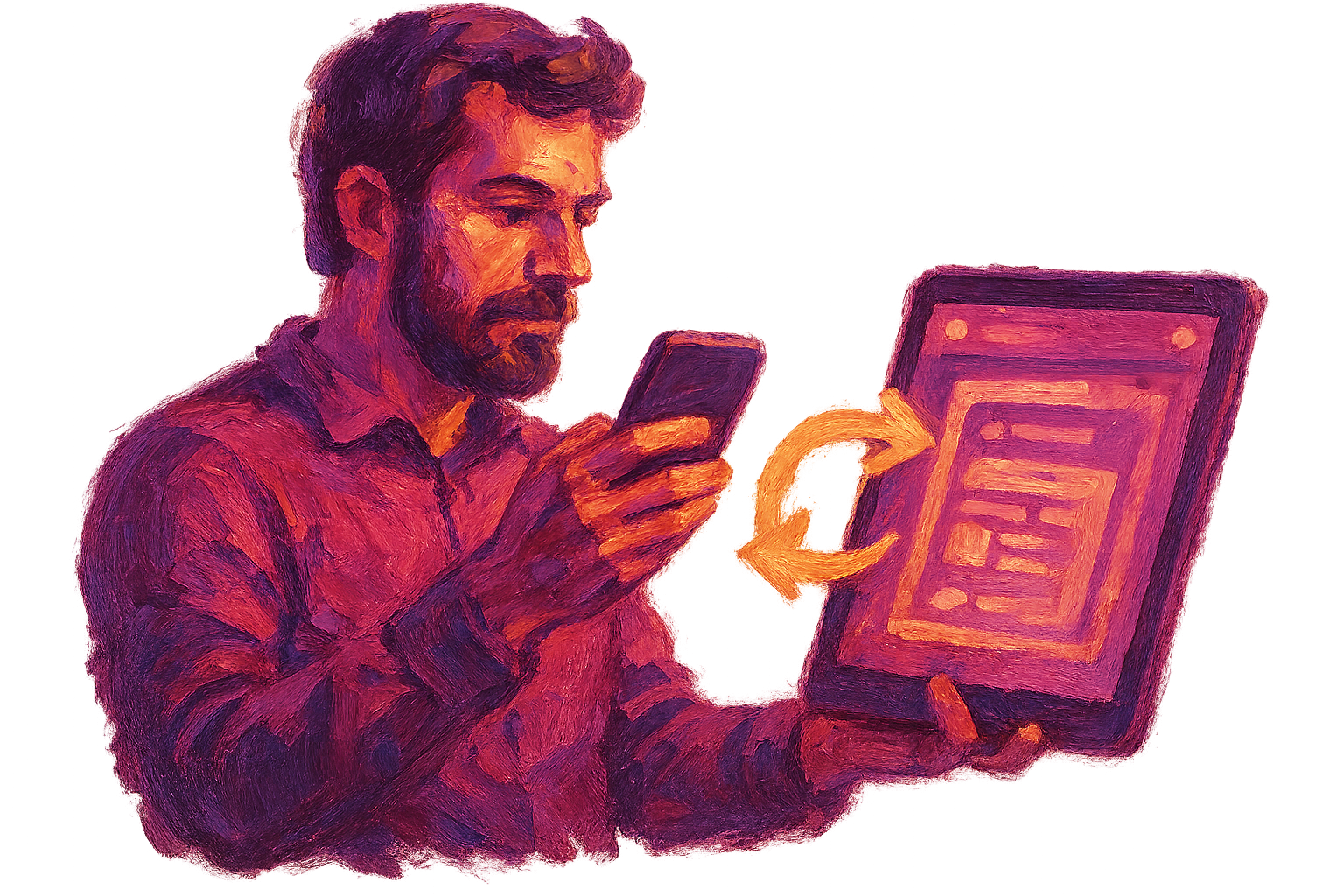





The textile sector, with its rapidly changing dynamics and increasing competition, has further emphasized the importance of an online presence.

Essential Features for Textile Companies' Websites#
With the rapidly changing dynamics and increasing competition in the textile sector, the importance of an online presence has grown even more. For a textile company, a website is not just a source of information, but also a critical tool for customer relations, product promotion, and brand awareness. Therefore, textile companies' websites must include certain essential features. These features should be designed to improve customer experience and increase sales. For example, elements such as a user-friendly interface, mobile compatibility, and impressive visuals are important for attracting potential customers. As Türk Bilişim, with our 28 years of experience, we will provide insights on how to effectively integrate these elements.
Quick Summary
- A user-friendly interface is important for textile websites.
- Mobile compatibility enhances user experience.
- Product visuals and descriptions should be effective.
User-Friendly Interface#
One of the most important features of a textile company's website is having a user-friendly interface. Ensuring that visitors can navigate the site comfortably greatly improves the user experience. For example, menus should be understandable, and product categories should be clearly defined. Users should be able to quickly find the products they are looking for. In this context, adding features like filtering options and a search bar is also beneficial. Additionally, functions such as allowing users to add items to their cart or save products for later purchases contribute to a user-friendly experience.
Mobile Compatibility#
As of 2026, it is observed that a large portion of internet traffic comes from mobile devices. Therefore, textile companies' websites must be mobile-compatible. Mobile compatibility means the website automatically adjusts to different screen sizes. Mobile device users typically expect a fast and efficient experience. If your website does not function properly on mobile devices, you risk losing potential customers. Companies can use responsive design methods to ensure mobile compatibility, which makes the site look user-friendly on every device.
Attractive and Effective Product Visuals#
Textile products are based on visual elements. Therefore, product visuals on the website need to be high-quality and eye-catching. High-resolution images can positively influence users' purchasing decisions by clearly showing product details. Additionally, it is important for product descriptions to be detailed and informative. Users want to learn about the product, so details such as fabric type, size options, and care instructions must be included. Türk Bilişim can assist companies in creating such detailed content.
In conclusion, textile companies' websites must include essential features such as a user-friendly interface, mobile compatibility, and effective product visuals. These elements improve customer experience and increase sales. As Türk Bilişim, we are here to help textile companies integrate these features. Our expert team can manage your project end-to-end.
Must-Haves#
These are the essentials that must be included:
Added Value (Bonus)#
Not mandatory but differentiating and optional:
Türk Bilişim sets up all these elements from a single source, end-to-end, and activates them in a way suitable for your business.
Pros and Cons#
Advantages
- Customer satisfaction is increased with an enhanced user experience.
- Opportunities for acquiring new customers increase with online visibility.
- A good website reflects the professionalism of the brand.
Points to Consider
- Budget may be strained initially due to high costs.
- Incorrect design choices can lead to user loss.
Design Tips to Enhance User Experience#
User experience (UX) is one of the most critical elements in the design of a website or application. A good user experience ensures that visitors can use the site more comfortably, find the information they are looking for faster, and consequently, increases conversion rates. To increase the time users spend on websites and to bring them back to the site, it is necessary to pay attention to some fundamental design tips. In this context, how elements such as usability, aesthetics, and content layout are optimized are among the factors that directly affect users' experiences. Here are some basic design tips you should consider to enhance user experience.

1. Create a Clean and Clear Design#
The design of your website should be clean and organized. Removing unnecessary elements is one of the best methods to prevent users from getting distracted. For example, overly complex menus or too many visual elements can cause users to get lost on the site. A clean design allows users to reach their goals faster. You can achieve this cleanliness by using a simple color palette and minimizing fonts in your design. Using contrasting colors to highlight the elements you want to draw users' attention to is also very effective.
2. Pay Attention to Fast Loading Times#
The loading time of a website is a factor that directly affects user experience. Research shows that the probability of users leaving a site increases by 7% for every second a page takes to load. Therefore, you should take steps such as optimizing images on your site, removing unnecessary plugins, and increasing your server speed. For example, you can ensure your page loads faster by compressing images and using them in appropriate formats. Additionally, you can use caching techniques for faster loading of your content.
3. Prioritize Mobile Compatibility#
Today, a large portion of users access websites via mobile devices. Therefore, responsive design is essential for enhancing user experience. Your website being mobile-friendly provides a user-friendly experience on different screen sizes. In mobile-compatible design, text readability, button accessibility, and ease of use of the page layout are critical elements. Additionally, content should be organized to allow mobile users to access the desired data faster and easier.
4. Evaluate User Feedback#
User feedback is an important resource for improving your design. Understanding the difficulties your users encounter while interacting with your site or what is missing in the features you offer makes your design more efficient. Surveys, user tests, or directly obtaining feedback can help in this regard. For example, by sending users a survey about frequently used features, you can learn in which areas you can make improvements. This way, you can shape your design according to user needs.
All these elements are important steps towards enhancing user experience. When a clean design, fast loading times, mobile compatibility, and user feedback are taken into account, users' interactions with the site are positively affected. It should not be forgotten that improving user experience is not just about aesthetic design; it also encompasses functionality and usability. In this context, our company's design team constantly pursues innovations to provide the best experience for users.
Common Mistakes#
Poor Use of Images
Low-quality or irrelevant images negatively affect the brand's image. Presenting products correctly and attractively is an important factor influencing customers' purchasing decisions. Therefore, high-resolution and professionally taken images should be used.
Insufficient Content
Lack of sufficient information on the website undermines user trust. If product descriptions, usage instructions, and technical details are missing, potential customers may turn to alternatives. Providing detailed and informative content facilitates users' decision-making process.
Complex Navigation
A difficult navigation structure causes users to get lost on the website. Users want to quickly access the information they are looking for. Creating a simple and understandable menu structure improves user experience and increases the time spent on the site.
SEO-Friendly Content Strategies and Keyword Usage#
The foundation of a content strategy should be shaped according to the needs of the target audience and the requirements of search engine algorithms. Creating SEO-friendly content requires not only placing keywords correctly but also prioritizing user experience. As of 2026, content strategies focus on understanding users' search intent and developing content accordingly. Therefore, for an effective content strategy, elements such as keyword analysis, content structure, and quality must be carefully planned. These approaches are key to being effective in content marketing.

Keyword Research#
Keyword research is the cornerstone of SEO-friendly content. This stage allows you to understand how frequently specific word groups and terms are searched for by your target audience. Key considerations at this stage include search volume, competition level, and user search intent. For example, using Google's Keyword Planner tool, you can determine how often specific keywords are searched and create content accordingly.
- Search volume: High-volume keywords can bring more traffic, but competition is also high.
- Long-tail keywords: They allow you to reach a niche audience with less competition.
Structuring Content#
SEO-friendly content should be presented within a specific structure. The title, subheadings, and paragraphs of the content allow search engines and users to easily scan the text. For example, using H2 and H3 heading structures, topics within the text can be clearly separated. This way, users can quickly access the information they are looking for. Additionally, links within the content (internal links and external links) are very important for SEO. These links direct readers to related content and increase the page's authority.
Keyword Density and Distribution#
Keywords must be used at the correct density within the content. Excessive keyword usage can be perceived as spam by search engines, which can negatively impact your ranking. Generally, a keyword density of 1-2% within the content is ideal. Furthermore, placing keywords naturally within the flow of the text enhances the quality of the content. For instance, integrating the keyword "digital marketing strategies" appropriately into the sentence flow is both user-friendly and beneficial for SEO.
In conclusion, SEO-friendly content strategies demonstrate that, along with keyword usage, content structure and quality are also important. Implementing these strategies helps meet user needs while achieving better rankings in search engines. Our company provides professional support in this process, effectively managing all steps.
Expert Opinion
An effective website for textile companies is a critical factor determining competitive advantage in the industry. Modern consumers prefer to research brands online and gather information before making a purchase.
Therefore, a website offering a user-friendly design, fast loading times, and quality content increases customer satisfaction and builds a loyal customer base. A website built with the right strategies not only boosts sales but also strengthens the brand's reputation.
E-Commerce Solutions Specific to the Textile Industry#
The textile industry has undergone many changes and transformations over time. Especially with the rise of digitalization, e-commerce has become an indispensable tool for companies seeking a competitive advantage in this sector. However, there are many details a textile company must pay attention to in order to create a successful e-commerce platform. Factors such as user experience, product presentation, security, and inventory management directly impact the success of your e-commerce site. In this article, we will examine e-commerce solutions tailored to the needs of textile companies and discuss the role Türk Bilişim can play in this process.
User Experience and Design#
User experience plays a critical role in the success of an e-commerce site. Textile products are often rich in visual appeal; therefore, products need to be presented in an impressive manner. An easily navigable interface allows users to browse the site comfortably. For example, filtering and sorting options help users quickly find the products they are looking for. Additionally, mobile compatibility is essential today, as a large portion of users shop via mobile devices.
Secure Shopping Experience#
Security is one of the most important factors for customers on e-commerce sites. Textile companies must obtain an SSL certificate and offer secure payment methods to protect users' personal and payment information. For instance, a textile company can integrate various payment methods like PayPal and credit cards to make the shopping experience secure for users. Furthermore, responding quickly to user feedback increases customer satisfaction.
Inventory Management and Stock Tracking#
The textile industry often requires extensive inventory management due to seasonal changes. Therefore, an effective inventory management application in e-commerce systems is of great importance. For example, the integrated inventory management systems offered by Türk Bilişim automatically track stock levels and send notifications for discounting unsold products or reordering. This system both increases the business's profitability and ensures customer satisfaction.
Marketing and SEO Strategies#
Textile companies need to develop effective marketing strategies to strengthen their online presence. Social media platforms, influencer marketing, and SEO efforts play a significant role in increasing the visibility of your e-commerce site. For instance, by identifying the keywords users search for in search engines and ensuring your product pages contain these words, you can achieve higher rankings in search results. Türk Bilişim contributes to helping your e-commerce site reach more users by offering professional SEO services in this process.
In conclusion, for textile companies to compete in the digital world, it is essential to implement e-commerce solutions correctly. From user experience to secure shopping, from inventory management to marketing strategies, many factors are components of a successful e-commerce platform. It should be remembered that in this process, Türk Bilişim's expert team will support your business's digital transformation by offering solutions tailored to your needs. Contact us now for more information!
Contact Turkish Informatics#
Get a free discovery and quote from Turkish Informatics' expert team for your project; let's achieve your digital goals together:
- Phone: 0216 755 3 555
- WhatsApp: 0532 216 07 54
- Email: [email protected]
- Web: turkbilisim.com.tr
Bu içeriği nasıl buldunuz?
Reaksiyon vermek için giriş yapmanız gerekiyor.
You Might Also Like






Gallery