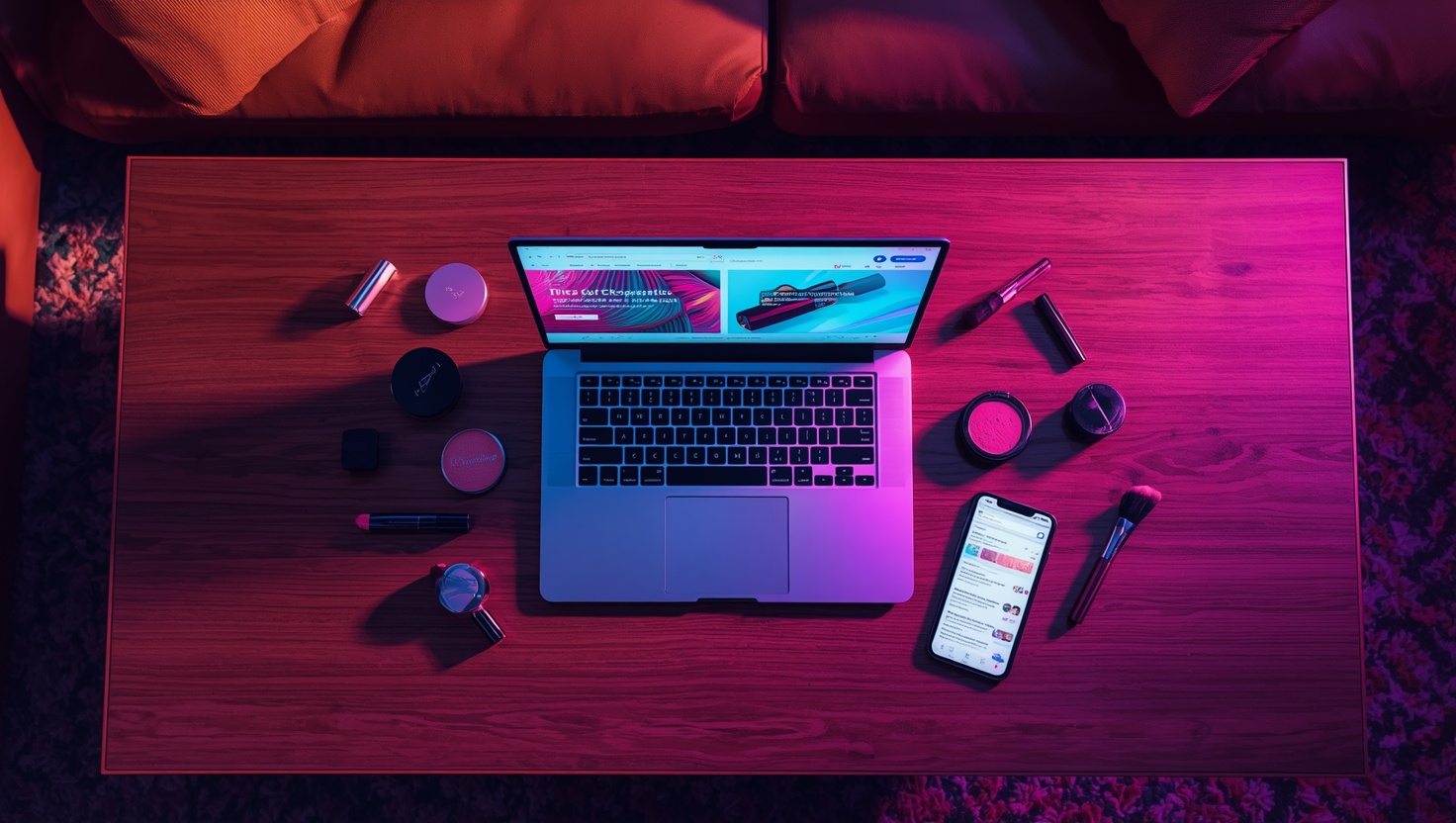







For cosmetic brands to have an effective presence in the digital world, it is essential to have the right website.

Essential Components of a Cosmetic Website#
For cosmetic brands to have an effective presence in the digital world, they must have the right website. This website should be supported by a user-friendly design that reflects the brand's identity. A good cosmetic website appeals to potential customers by prioritizing user experience alongside visual aesthetics. With the rise of e-commerce, cosmetic brands' websites should not only provide information but also facilitate product sales. In this article, we will discuss the essential components of a cosmetic website in detail. These components are critical for enhancing user interaction and increasing brand awareness.
Quick Summary
- Visual Appeal: High-quality visuals and design attract users' attention.
- Product Information: Detailed product descriptions simplify the decision-making process for users.
- Mobile Compatibility: The site should function properly on mobile devices to reach a wider audience.
Visual Design and User Experience#
Cosmetic websites should capture users' attention by offering rich visual content. High-resolution photos of products can persuade users to make purchases. Additionally, the site's design is an important part of the user experience. The color palette, typography, and layout should reflect the brand's identity and allow users to navigate without strain. For example, pastel tones and a simple design may be suitable for a luxury cosmetic brand.
- High-quality visuals: Professionally taken photos showcasing the details of the products.
- Quick access: Easy access to product categories and information should be provided.
Product Information and Details#
One of the most important elements of the website is presenting product information in a detailed and effective manner. Each product should include descriptive information, an ingredient list, usage instructions, and benefits. This information helps users make informed purchasing decisions. Additionally, user reviews and ratings provide a significant reference source for potential buyers. For example, a product rated 4.5 stars by users increases the likelihood of new customers purchasing the product.
Mobile Compatibility and Speed#
Today, a large portion of internet users shop via mobile devices. Therefore, it is essential for cosmetic websites to be mobile-compatible. Responsive design ensures that the site displays correctly on various devices. Additionally, page loading speed directly affects the user experience. A fast-loading site encourages users to stay longer and make purchases. For instance, if your site loads in 3 seconds, only 40% of users will leave, but if this time increases to 5 seconds, that rate can rise to 90%.
In conclusion, creating an effective website for a cosmetic brand requires not only visual design but also user experience, mobile compatibility, and detailed product information. At Türk Bilişim, we strengthen the digital presence of cosmetic brands by paying attention to these elements. It is important to take the right steps to manage all components of your website professionally and elevate your brand. These essential components play a critical role in increasing your brand's online success.
Must-Haves#
Essentials that must be present in this business:
Added Value (Bonus)#
Not mandatory but impactful, optional features include:
All of these elements are managed end-to-end by Türk Bilişim, tailored to fit your business.
Pros and Cons#
Advantages
- Sales can increase by helping users better understand the products.
- Mobile-compatible design offers the opportunity to reach a wider audience.
- Brand loyalty can be established by increasing reliability with user reviews.
Considerations
- High-quality visuals and content can be time-consuming and costly.
- Developing personalized systems requires technical knowledge and resources.
Design Elements That Enhance User Experience#
User experience is a critical element that directly affects the success of websites. An effective design should not only facilitate visitors' interactions with the site but also meet their needs. In this context, design elements that enhance user experience encompass a wide range from visual aesthetics to functionality. Many factors, from simple navigation to responsive design, determine the time users spend on the site and their overall satisfaction level. A good design is not only visually appealing but also should guide users towards their goals and enhance their interactions. At this point, it would be beneficial to examine the design elements that enhance user experience in more detail.

Simple and Understandable Navigation#
The navigation on your website is one of the most important elements that determine users' movements within the site. You should create a simple and understandable menu structure so that users can quickly and easily access the information they are looking for. For example, the menu on the homepage should only include the most important categories, while subcategories can use drop-down menus. This type of structure allows users to explore the site more comfortably. Additionally, it would be quite beneficial to keep in mind the pages that users frequently visit and add quick access links to these pages.
- Opt for a clean and simple menu structure.
- Manage content hierarchy with drop-down menus.
- Create "quick access" links for prominent pages.
Responsive Design#
With the widespread use of mobile devices, the importance of responsive design has been increasing. Considering that users access your website from different devices (phones, tablets, computers), the design must appear appropriately on each device. A responsive design automatically adjusts according to the users' screen size while ensuring that the content is displayed in the best possible way. This way, users experience a consistent experience on any device when they visit the site. For example, large visuals of products on an e-commerce site should be presented smaller but clearly for mobile devices.
Fast Loading Times#
Another important factor affecting user experience is loading times. If your website loads slowly, the likelihood of users leaving the site increases. Research shows that user satisfaction decreases by 7% for every 1-second delay in the loading time of a web page. Therefore, it is important to improve your site's speed by removing unnecessary files, optimizing image sizes, and choosing a fast hosting service. For instance, you can improve your loading times by compressing the images used on your website or using lazy loading techniques.
Overall, effectively implementing design elements that enhance user experience will be a critical step for the success of your website. Elements such as simple and understandable navigation, responsive design, and fast loading times increase the duration users stay on your site while maximizing their satisfaction. By considering each design element, continuously improving user experience will be the key to your site's long-term success.
Common Mistakes#
Insufficient Product Information
When the ingredient information of cosmetic products is incomplete or unclear, users may lose trust. Providing detailed and accurate ingredient information helps users make informed purchases.
Complex Navigation
Complex menus that cause visitors to get lost within the site negatively affect user experience. A simple and understandable navigation structure allows users to quickly reach the products they are looking for.
Insufficient Mobile Optimization
A site that is not optimized for users shopping via mobile devices can lead to loss of sales. A mobile-friendly design provides a seamless experience across all devices, increasing conversion rates.
Increasing Visibility with SEO Strategies#
Search Engine Optimization (SEO) is one of the most effective ways to increase online visibility. When the right SEO strategies are used, businesses can rank higher on search engine results pages (SERP) for their websites. This allows them to reach more users and engage with potential customers. SEO not only targets keywords but also includes elements such as content quality, user experience, and link building. A good SEO strategy plays a critical role in the success of a website. Now, let's discuss different SEO strategies and examine how they can be implemented.

Keyword Research and Usage#
Keyword research is one of the cornerstones of SEO. Identifying the right keywords can increase your site's visibility in potential visitors' searches. It is important to understand what terms users are searching for when determining your keywords. For example, using more specific keywords like "natural skin care products" instead of "cosmetic products" can help you reach your target audience better. Additionally, strategically placing your keywords within your content is also important. By using your keywords in places like titles, subtitles, and meta descriptions, you can help search engines better understand your content.
On-Page SEO Practices#
On-page SEO practices are methods used to enhance the optimization of your website. One of the main techniques is organizing the URL structure. Short and descriptive URLs are more understandable for both users and search engines. For example, using understandable URLs like "www.example.com/natural-skin-care-products" instead of "www.example.com/products" can help your page rank higher. Additionally, regularly updating your content and adding current information can also improve your SEO performance.
Link Building#
Link building is an important component of SEO strategies. Quality links from other websites are considered a trustworthy source by search engines. Therefore, it is important to acquire links by establishing partnerships with other companies in the industry or by guest blogging. For example, when you write as a guest author on a beauty blog, linking back to your site shows both the blog's visitors and search engines that your site is valuable. However, remember that links should be natural and of high quality; spam links can be penalized by search engines.
Content Marketing and SEO#
Content marketing is a strategy that goes hand in hand with SEO. Creating quality and informative content encourages users to spend more time on your site, which sends a positive signal to search engines. You can attract your target audience by using various types of content such as blog posts, infographics, and videos. For example, by creating a blog post titled "natural skin care tips," you provide information while naturally incorporating your keywords to strengthen your SEO. Always strive to provide up-to-date and quality information in your content; this encourages users to return.
Key Takeaway
SEO strategies include elements such as keyword research, on-page optimization, link building, and content marketing. Integrating these elements can enhance your online visibility.
The Importance of Website Design for Cosmetic Brands
Websites of cosmetic brands play a critical role not only in selling products but also in building brand identity and engaging with users. A user experience-focused design enhances the brand's credibility.
The quality of visual content and detailed product descriptions help users make informed choices. Additionally, user reviews and interactive areas assist the brand in building a community.
Content Marketing Tactics for Cosmetic Brands#
Creating effective content marketing strategies for your cosmetic brands is a critical step in highlighting your brand and building consumer loyalty. By 2026, content marketing has become one of the most important tools that help brands establish deeper connections with their target audiences. In the cosmetic industry, producing original, high-quality, and attention-grabbing content to inform customers about your products not only increases sales but also enhances your brand's credibility. In this article, we will provide detailed information about content marketing tactics for cosmetic brands.
Start with Target Audience Analysis#
For a successful content marketing strategy, you need to know your target audience well. Who makes up your target audience? By analyzing factors such as age, gender, geographic location, and purchasing behaviors, you can create content that appeals to them. For example, fun and social media-focused content for younger users, while detailed product information and care tips may be preferred for more mature audiences. Target audience analysis personalizes your content, making it more effective.
- Collect age and gender information.
- Identify user needs through online surveys.
- Track trends by analyzing social media interactions.
Leverage the Power of Visual Content#
Among the marketing strategies of cosmetic brands, visual content is one of the most eye-catching and effective. Using high-quality photos and videos when showcasing your products attracts the interest of potential customers. Especially on social media platforms, visual content plays a critical role in capturing users' attention. Eye-catching makeup videos or "before-and-after" visuals can encourage users to try your products. Additionally, user-generated content (UGC) where users share their own experiences provides a significant advantage for brands.
Provide Information with Blog Posts#
Blog posts are an excellent tool for cosmetic brands to reach their target audiences. Content that introduces your products, offers usage tips, or provides information about makeup techniques helps users get to know your brand better. For example, blog posts on topics like "Skin Care Routines in Summer" can be very beneficial for users who pay attention to skin health. Such content also helps you achieve better rankings in search engines and drives organic traffic.
Increase Engagement with Social Media Campaigns#
Social media is a perfect platform for cosmetic brands to increase engagement and reach potential customers. Regularly updating your brand's social media accounts, interacting with your followers, and organizing contests or campaigns enhance your brand awareness. For instance, you can create a campaign that encourages users to share their experiences with your brand on Instagram. This type of user participation increases engagement and builds trust.
In conclusion, adopting content marketing tactics for cosmetic brands is extremely important for highlighting your brand and building consumer relationships. Strategies such as target audience analysis, the use of visual content, blog posts, and social media engagement can significantly boost your brand's success when implemented correctly. If you are struggling to manage these processes yourself, you can contact the expert team at Türk Bilişim for professional support.

Bu içeriği nasıl buldunuz?
Reaksiyon vermek için giriş yapmanız gerekiyor.
You Might Also Like






Gallery