







Association websites are a critical platform for strengthening communication with members, promoting projects, and building community.

Things to Consider in Association Website Design#
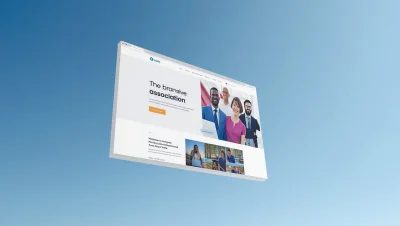
Association websites are a critical platform for strengthening communication with members, promoting projects, and building a community. Therefore, there are many factors that associations need to consider in their website design. First and foremost, user experience and accessibility are extremely important. Visitors should have a seamless experience while using the site. Additionally, the harmony of content and visual elements reflects the professionalism of the site. As Türk Bilişim, with our extensive experience in designing association websites, we bring these elements together in the most effective way.
Quick Summary
- User experience and accessibility should be prioritized.
- Visual and content harmony must be ensured.
- Mobile-friendly design is critically important.
User Experience and Accessibility#
A good user experience is indispensable for the success of an association website. A simple and understandable menu structure should be created so that visitors can easily navigate the site. Furthermore, content should be presented clearly, avoiding unnecessary complexity. For example, important information should be placed on the homepage in a way that captures users' attention. In addition, designing in compliance with accessibility standards ensures that individuals with disabilities can also use the site comfortably. Details such as color contrast, font sizes, and compatibility with screen readers play a major role in meeting these standards.
Content and Visual Harmony#
The harmony of content and visuals on association websites reflects the brand's identity. Regularly updating content encourages visitors to return continuously. Moreover, the quality and thematic relevance of visual content create a professional image. For instance, the visual presentation of association projects can be supported with impressive photos and videos. This allows the association's activities and achievements to be showcased more effectively. It should be noted that supporting each visual with appropriate tags is also very important for SEO. Therefore, striking a balance between content and visuals is a critical factor in attracting users' interest.
Mobile Compatibility and Speed Optimization#
Today, the rate of accessing websites from mobile devices is rapidly increasing. Therefore, it is essential for association websites to be mobile-friendly. Using responsive design to ensure proper display on all devices enhances user experience. Additionally, optimizing site speed is of great importance. A slow-loading website can cause users to lose interest. For example, optimizing image sizes and removing unnecessary plugins can shorten loading times. A fast-loading website reinforces the professional image of the association and ensures visitors spend more time on your site.
In conclusion, there are many factors to consider in the design of association websites. User experience, accessibility, content-visual harmony, and mobile optimization are just a few of these factors. As Türk Bilişim, with our expertise in these areas, we can provide the most suitable solution for your association and realize an effective web design. A good association website will strengthen communication with your community while also helping your association achieve its goals.
Must-Haves#
Things that must be included in this work:
Added Value (Bonus)#
Not mandatory but makes a difference, optional items:
Türk Bilişim sets up and activates all these elements end-to-end from a single source, tailored to your business.
Content Management: What Information is Essential for an Association Website?#
An association website should be an effective platform to inform relevant communities, promote events, and increase membership. Proper content management on such sites is critical for attracting visitors' attention and encouraging them to spend more time on the website. Your content needs to be not only informative but also effectively organized and easily accessible. In this context, examining what information is essential for association websites is important for enhancing user experience and building a stronger connection with your target audience. Here are the fundamental content components that should be present on your association website.

1. Information About the Association#
A section containing basic information such as your association's mission, vision, and history will be highly informative for visitors. Here, concise yet comprehensive details should be provided about why the association was founded, what purposes it serves, and its activities. This information increases the trust of potential members in the association and helps them establish a connection. For example, sharing your association's founding story and the challenges faced during this process can help you build a more sincere relationship with your visitors.
- Founding date and story of the association
- Mission and vision statements
- Notable achievements and projects
2. Events and Announcements#
Announcing your association's activities and events constitutes one of the most important content pieces of your website. In this section, you need to provide information about the dates, locations, and details of upcoming events. Additionally, photos from past events and participant feedback can also be included here. This way, your visitors can see that your association is active and involved in numerous activities. For instance, providing detailed information about a symposium or workshop you organize annually can increase participation.
3. Membership and Contact Information#
Providing clear information on how visitors can become members of the association will facilitate their participation. In this section, you should include details such as membership conditions, required documents, and application processes. Additionally, contact information must definitely be included in this section. A contact form or a direct email address should be added so that your visitors can quickly convey their questions or requests. Providing contact information in a clear and understandable manner allows for direct connection with people.
4. Common Mistakes and Correct Methods#
Common mistakes on association websites include failing to update content and having an unnecessarily complex navigation structure. These errors can negatively impact user experience, causing visitors to leave the site. The correct method involves regularly updating content and creating a user-friendly menu structure. For example, the event calendar should be kept constantly up to date, and on-site search functions should be developed so that users can easily access the information they need.
In conclusion, determining the necessary content for your association website is of great importance for both your current members and potential members. By offering visitors clear, informative, and accessible content, you can more effectively convey your association's purpose and activities, thereby increasing awareness. A comprehensive content management process will create a solid foundation to carry your association into the future.
Pros and Cons#
Advantages
- An association website increases the association's visibility, offering opportunities to gather more members and donations.
- By providing easy access to information, it enables the association's activities to reach wider audiences.
- It strengthens communication among members and fosters a sense of community.
Points to Consider
- When the website is not updated, outdated information can create a wrong impression.
- Technical issues or accessibility problems may cause potential members to lose interest.
How to Create an SEO-Friendly Association Website#
Association websites are vital for such organizations to reach their communities, find support, and raise awareness. However, to create an effective website, functionality alone is not enough; it also needs to be SEO-friendly. An SEO (Search Engine Optimization) compliant association website ranks higher in search engines, making it easier to reach your target audience. In this article, we will deeply examine the fundamental steps and important details for creating an SEO-friendly association website. Additionally, we will provide information on how to manage this process with technical details and practical applications.
1. Conducting Keyword Research#
One of the cornerstones of a successful SEO strategy is keyword research. Considering your association's mission and target audience, it is important to determine which keywords your potential visitors are searching for. You can use tools like Google Keyword Planner at this stage. For example, by targeting keyword groups such as "environmental protection association" or "youth organization," you can build your content around these words. Keywords should be naturally integrated into your page titles, subheadings, and content flow.
- Use your keywords in a balanced way throughout the content.
- Focus on long-tail keywords to reach a more niche audience.
2. Creating a Mobile-Friendly Design#
Today, internet access via mobile devices is increasingly common. Therefore, having a mobile-friendly association website enhances user experience and positively impacts SEO performance. Using a responsive design is important to ensure your site displays correctly on all devices. Ensure that menus and content are accessible so users can easily navigate on mobile devices. For instance, menus accessible with a single click and fast loading times are critical for mobile users. This not only improves user experience but also positively affects search engine rankings.
3. Focusing on Content Quality#
The backbone of an SEO-friendly website is quality content. Create detailed and informative content about your association's purpose and activities. Blog posts, news, and articles can attract users' interest and keep them on your site longer. Additionally, having original and engaging content makes you more valuable in the eyes of search engines. For example, a blog post titled "Environmental Goals for 2026" provides information on a current and societal topic while offering an opportunity to promote your association. Such content increases the likelihood of being shared on social media, helping you reach a wider audience.
4. Technical SEO Applications#
Remember that SEO is not limited to content alone; technical SEO is also a critical factor. Elements such as fast website loading, securing it with an SSL certificate, and creating a sitemap help search engines better understand your site. A sitemap informs search engines about which pages exist on your website, while fast loading times enhance user experience. In this context, you can increase your page loading speed by avoiding unnecessary plugins and optimizing your images.
In conclusion, creating an SEO-friendly association website requires careful planning and implementation. From keyword research to mobile-friendly design, from content quality to technical SEO, every stage is important for making your association more visible in the online world. By working with an expert firm like Türk Bilişim, you can manage this process more effectively and help your association achieve its goals.
Common Mistakes#
Insufficient Content
Lack of sufficient information and content on the website can cause visitors to lose interest. It is important to provide information about the association, introduce events, and explain membership processes. The correct approach is to create comprehensive and up-to-date content.
Not Addressing the Target Audience
If the website's design and content are not suitable for the target audience, it negatively impacts user experience. Understanding the needs and expectations of the target audience is critical for the website's success. Therefore, a user-focused design process should be followed.
Lack of Mobile Compatibility
Today, many users access the internet via mobile devices. A website that is not mobile-friendly may cause users to leave the site. Therefore, it is necessary to provide a good experience on every device by using a responsive design.
Website Tips to Enhance User Experience#
A website's user experience (UX) directly affects how visitors interact with the site and their overall satisfaction levels. It is extremely important for users to navigate the site quickly and effectively, access the information they are looking for seamlessly, and receive the service they expect. Providing a good user experience not only reduces the site's bounce rate but also creates a positive impact on the brand's reputation. For example, if a user cannot reach the desired information within a few clicks, they may choose to turn to another source. Therefore, reviewing the details that need attention in web design has become a critical step for businesses. Here are some important tips to consider for enhancing user experience.

1. Ensure Fast Loading Times#
Fast loading of your website is one of the most important factors directly affecting user experience. According to research, if a web page takes longer than 3 seconds to load, it can cause 40% of visitors to leave the site. Therefore, you can take two basic steps to increase your website's speed: optimization and content management. For example, reducing image sizes, minimizing unnecessary JavaScript and CSS files, and using caching techniques ensure pages load faster.
- Optimize the size of images.
- Implement caching methods.
2. Don't Overlook Mobile Compatibility#
Today, we know that mobile devices hold a significant share of internet traffic. A large portion of users will visit your site from their mobile devices. Mobile compatibility plays a critical role in enhancing user experience. By using responsive design, you can optimize the appearance of your website according to different screen sizes. For example, the size of menu buttons, text sizes, and content layout should be user-friendly for mobile devices. Additionally, paying attention to Google's mobile compatibility criteria can positively affect your SEO ranking.
3. Optimize the User Interface (UI)#
The user interface is an important component that determines how visitors interact with your website. Interface design can influence how much time users spend on your page. An attractive interface encourages users to visit the site for longer periods. One of the elements to consider in interface design is consistency. The placement of buttons, links, and menus should be consistent so that users do not get lost while navigating the site. Additionally, the visibility of your call-to-action (CTA) buttons should be increased. They need to be sufficiently prominent and appealing to encourage users to take action.
Enhancing user experience is a factor that directly impacts the success of your website. Fast loading times, mobile compatibility, and an effective user interface ensure that users spend more time on your site. Therefore, adopting a user-focused approach in every aspect of your website will help you gain customer satisfaction and loyalty in the long run.
The Importance of Creating an Association Website
Strengthening the digital presence of associations is an inevitable necessity in today's world. An effective website is the most efficient way to convey the association's mission and vision to broad audiences.
A website should function beyond just sharing information; it should serve to build community and facilitate interaction. Providing a user-friendly experience so that visitors can connect with the association is the foundation of a successful website.
Best Platforms and Tools for Association Websites#
Association websites are a critical tool for strengthening communication with members, announcing events, and increasing donations. In this context, choosing the right platform and tools is of great importance for strengthening your association's online presence. A good association website should have a user-friendly design, keep content up-to-date, and consider mobile compatibility. Additionally, it should provide effective navigation so users can easily find information. In this article, we will conduct a detailed review of the best platforms and tools for association websites.
1. Choosing Content Management Systems (CMS)#
Content management systems provide a fundamental structure for creating and managing your website. Among the most popular CMS options for association websites, platforms allow users to add and edit content without needing technical knowledge. For example, thanks to their user-friendly interfaces, you can easily create content such as event calendars, announcements, and donation pages. Additionally, you can personalize your site's appearance with a wide range of theme and plugin options.
- Simple drag-and-drop interfaces allow you to create content without requiring technical knowledge.
- You can customize your site in a short time with quick theme and plugin installations.
2. Event Management Tools#
Managing association events is vital for increasing member participation. Event management tools help you plan, promote, and gather feedback from participants for your events. For example, you can track participant numbers with registration systems and conduct post-event evaluations. Furthermore, these tools allow you to sell tickets and share event announcements on social media platforms.
3. Donation and Membership Management Systems#
Collecting donations is a critical factor for the sustainability of associations. Donation management tools enable associations to accept online donations and manage member registrations. With user-friendly forms and secure payment systems, you allow potential donors to easily make donations using your site. Additionally, membership management systems allow you to update the information of existing members and communicate with them.
4. SEO and Analytics Tools#
Using SEO (Search Engine Optimization) tools is very important to increase the visibility of your website. While SEO helps you achieve better rankings in search engines, analytics tools help you understand visitor behavior. This way, you can learn which content attracts more interest and develop strategies to improve your website's performance. As of 2026, more associations are emphasizing SEO strategies to strengthen their online presence.
In conclusion, the best platforms and tools for association websites should be supported by the right content management systems, event management, and donation systems. The expert team at Turk Bilisim can help strengthen your association's online presence by offering the most suitable solutions for you in this process. Remember, a good website is not just an information tool, but also a platform that reflects your association's mission and vision.
Contact Turkish Informatics#
Get a free discovery and quote from Turkish Informatics' expert team for your project; let's achieve your digital goals together:
- Phone: 0216 755 3 555
- WhatsApp: 0532 216 07 54
- Email: [email protected]
- Web: turkbilisim.com.tr
Bu içeriği nasıl buldunuz?
Reaksiyon vermek için giriş yapmanız gerekiyor.
You Might Also Like





Gallery