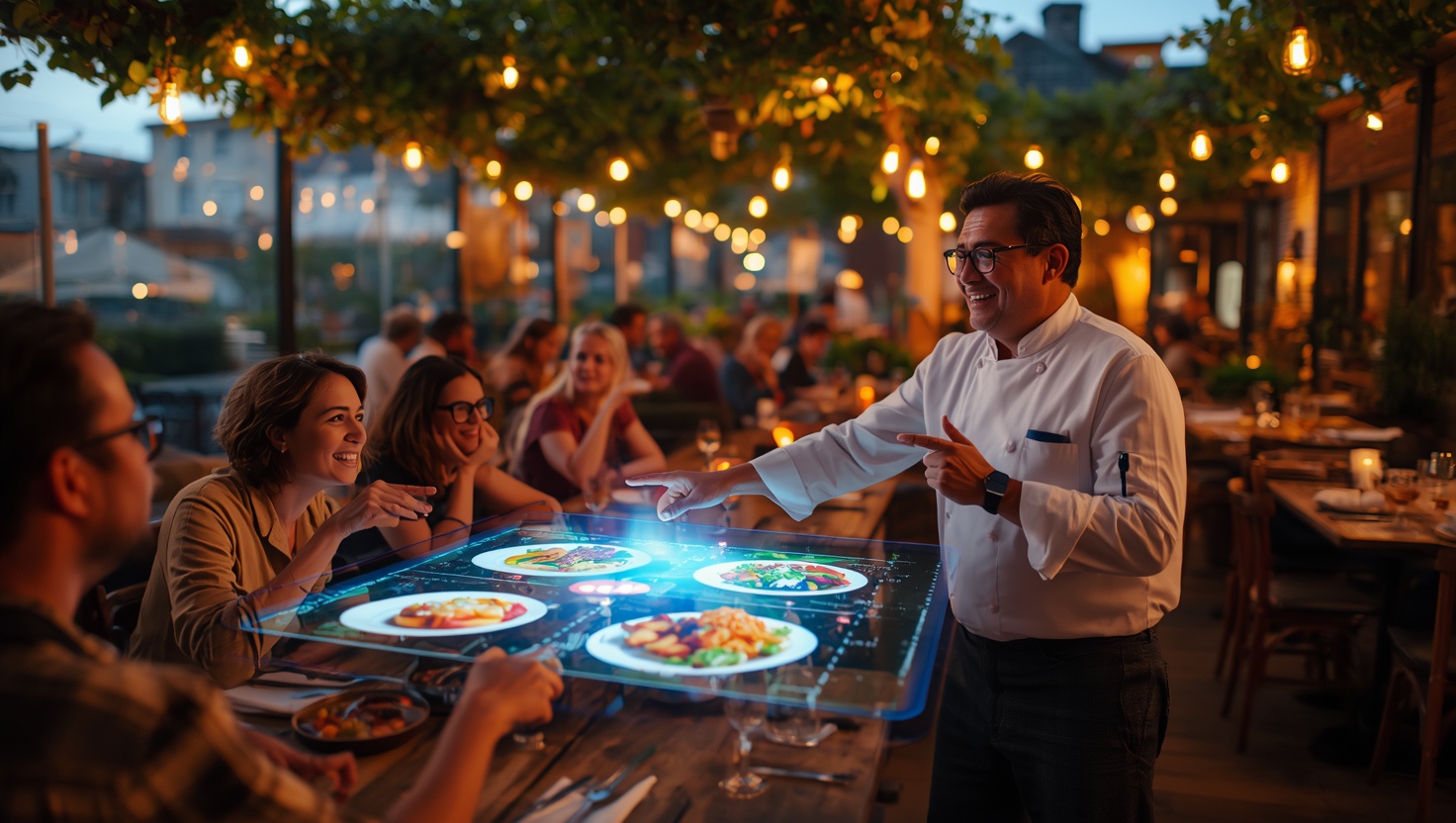







Creating a restaurant website requires prioritizing not only visual aesthetics but also user experience.

Essential Design Elements for a Restaurant Website#
Creating a restaurant website requires not only visual aesthetics but also prioritizing user experience. In this context, there are certain fundamental elements to consider in the design of restaurant websites. These elements aim to provide a user-friendly and functional web experience that reflects the restaurant's brand identity. A good design ensures users can easily access the information they seek while conveying details about the restaurant's menu, services, and overall atmosphere. Especially with the rise of digital services today, the online presence of restaurants has become even more critical. Here are the main elements you should consider in the design of your restaurant website.
Quick Summary
- Restaurant websites should provide convenience for users and keep them informed.
- Mobile compatibility and fast loading times are critically important.
- Visual content and user feedback enhance the impact of the design.
Mobile Compatibility and Fast Loading Times#
Today, a large portion of internet traffic occurs through mobile devices. Therefore, having a mobile-friendly restaurant website is an unavoidable necessity. When users enter the site, the page loading quickly directly affects the user experience. According to research, if a website's loading time exceeds 3 seconds, 40% of users abandon the page. Additionally, mobile compatibility allows users to easily find the menu, reservations, or contact information. Adopting responsive design techniques during the design process increases user satisfaction for restaurants.
Visual Content and Aesthetic Design#
Visual content on restaurant websites forms users' first impressions. High-quality photos attract visitors' attention by offering samples from the restaurant's menu. For example, photos reflecting the restaurant's special dishes or the ambiance of the venue leave a positive impression on users' minds. Furthermore, the restaurant's color palette and font choice should reflect the brand's identity. An appropriate aesthetic design encourages users to stay longer on the site and visit again.
User Feedback and Ease of Communication#
User feedback plays a significant role in enhancing a restaurant's reliability and service quality. Customer reviews and ratings on the website can influence potential customers' decision-making processes. Additionally, adding an effective contact form or live support line so visitors can easily communicate ensures users receive quick responses to their questions. This improves the user experience while also increasing interaction with the restaurant.
In conclusion, essential elements to consider in restaurant website design include mobile compatibility, visual content quality, and user feedback. As Türk Bilişim, we offer custom web design solutions for your restaurant by taking these elements into account. A good web design should provide not only aesthetics but also a user-friendly experience. Remember, your users' satisfaction is critically important for the success of your restaurant's digital presence.
Must-Haves#
These are the essentials that must be included:
Added Value (Bonus)#
Not mandatory but makes a difference, optional items:
Türk Bilişim sets up and activates all these elements end-to-end from a single source, tailored to your business.
Functions That Enhance User Experience#
User experience (UX) is the sum of all interactions a website or application offers to its users, and the impact of these interactions on users is significant. User satisfaction and loyalty depend on their interactions with the site. Therefore, developing functions that enhance user experience plays a critical role in the success of businesses. In this article, we will provide detailed information about important functions that improve user experience and how they are implemented. Many elements, from user-friendly interfaces to fast loading times, can directly affect how users interact with a site. Effectively using these elements is the key to creating a successful digital presence.

1. Fast Loading Times#
Fast loading of websites is one of the most important factors directly affecting user experience. Research shows that for every 1-second increase in page load time, user satisfaction decreases by 20%. Fast loading times increase the likelihood of users staying engaged with your site. Therefore, optimizing pages and increasing server speed can significantly improve user experience. Effective strategies for this include optimizing image files, removing unnecessary code, and using a suitable Content Delivery Network (CDN).
- Reducing file sizes through image optimization
- Choosing the right infrastructure to shorten server response times
2. User-Friendly Interface Design#
A user-friendly interface design is critical for users to navigate your website easily. Preventing users from getting lost within the site provides a smooth experience and increases their satisfaction. Clear and understandable menus allow users to quickly find the information they are looking for. It is especially important to use responsive design methods to enhance the user experience on mobile devices. This way, users can receive the same quality of service from any device.
3. Personalized Experiences#
Another important function that enhances user experience is offering personalized experiences. Content customized according to users' interests and previous preferences encourages them to interact more. For example, an e-commerce platform can increase sales and ensure user satisfaction by making recommendations based on the user's past purchase and browsing habits. Integrating data analytics and systems that track user behavior is highly beneficial for a personalized user experience.
4. Interactive Elements and Feedback Mechanisms#
Another element that increases users' desire to interact with the website is interactive elements. Features like surveys, feedback forms, or live chat encourage users to share their experiences. Such feedback mechanisms are critical data for understanding user needs and improving the site. For instance, users can voice difficulties they encounter while using a service, allowing for improvements to be made. These types of interactive elements show users that they are valued.
All these functions come together with the aim of enhancing user experience, helping to create a more effective digital presence. Fast loading times, user-friendly designs, personalized experiences, and interactive elements are factors that directly impact the success of websites. At this point, considering user needs and implementing these elements in the best possible way will be the most effective path to success.
Pros and Cons#
Advantages
- Increases customer reach
- Strengthens brand awareness
- Provides a competitive advantage
Points to Consider
- Insufficient content updates can cause issues
- Poor user experience can lead to customer loss
The Importance and Applications of Mobile Compatibility#
Mobile compatibility has become one of the most critical factors directly affecting the success of websites today. The use of mobile devices has increased exponentially compared to desktop computers, changing the way businesses reach their target audiences. According to research conducted as of 2026, more than approximately 60% of internet traffic comes from mobile devices. This highlights the necessity for websites to be mobile-friendly. Mobile compatibility is essential for improving user experience and increasing conversion rates. Additionally, search engines prioritize mobile-friendly websites, ranking them higher in their results.
Core Principles of Mobile Compatibility#
There are several fundamental principles to consider for achieving mobile compatibility. First and foremost, responsive design is necessary to provide a consistent appearance across all devices. Responsive design ensures that content automatically adjusts according to screen size, allowing users to easily access the information they need. For example, on a restaurant website, making the menu and reservation sections more prominent and accessible on the mobile version enhances the user experience.
- Using responsive design
- Choosing high-quality images and graphics
Mobile Speed and Performance#
Mobile compatibility is not limited to design alone; website speed and performance are also critical. Mobile users are impatient with slow-loading pages. Research shows that each second of a webpage's loading time can reduce conversion rates by 7%. To ensure your mobile site loads quickly, it is important to optimize image sizes and remove unnecessary JavaScript and CSS files. Additionally, using Content Delivery Networks (CDNs) can improve your site's global reach and speed.
User Experience and Navigation#
In mobile compatibility, user experience plays a major role in the success of your site. Mobile users seek a simple and understandable navigation structure. Complex menus and excessive information overload can drive users away from your site. Instead, you should create a structure that allows users to quickly access the information they need. For instance, on a hotel website, instantly displaying accommodation options and prices speeds up the user's decision-making process.
In conclusion, mobile compatibility has become an unavoidable necessity for businesses. As the rate of users accessing websites from mobile devices increases every day, adapting to this situation is critical. Responsive design, fast loading times, and effective user experience are key elements of mobile compatibility. Implementing these elements with the right strategies will contribute to businesses achieving success in the digital world.
Common Mistakes#
Outdated content
Outdated content on a restaurant website undermines the trust of potential customers. Failure to update menu prices or add new dishes can lead to user disappointment and cause them not to choose the restaurant. Content should be updated regularly.
Insufficient visual content
Low-quality or insufficient visual content reduces the appeal of the dishes a restaurant offers. Customers often make decisions based on visuals, so it is important to use professional photos and accurately reflect the presentation of the food. Visual content establishes the restaurant's identity.
Complex navigation
A complex navigation structure that causes visitors to get lost on the website negatively impacts the user experience. Customers want to quickly find the information they are looking for. Creating a simple and understandable menu structure allows users to browse the site more comfortably.
SEO-Friendly Content Strategies#
SEO-friendly content strategies are critically important for helping search engines better understand your websites. These strategies are designed to enhance user experience, increase your website's visibility, and ultimately generate organic traffic. There are several key elements to consider in your content strategy, such as keyword research, content structure, and focusing on user intent. In this section, we will explore ways to achieve top rankings in search engines by creating effective content strategies.

Keyword Research#
Keyword research should be the foundation of your content strategy. Understanding which terms users employ when searching for your product or service enables you to select the right keywords. When conducting research, you should consider competition level, search volume, and user intent. After identifying your keywords, you should use them naturally within your content. For example, placing your keyword in the title, subheadings, and body of a blog post in a balanced manner will help search engines better understand your content.
Content Structure and Format#
Your content structure helps readers better comprehend the text and assists search engines in indexing the content. You should use H1, H2, and H3 heading tags to create a hierarchical structure. For instance, the H1 tag should be your main title, H2 should indicate your subheadings, and H3 should cover more specific topics. Additionally, ensure your paragraphs are short and concise. This captures users' attention while also contributing to search engines' understanding of your content.
User Intent and Content Alignment#
User intent is a crucial element for the success of your content strategy. Understanding what users are searching for by typing specific words into search engines allows you to tailor your content to these intents. For example, if a user searches for "best restaurants," you should know that this user is looking for restaurant recommendations. Accordingly, you should create your content to meet users' expectations. Furthermore, using visual content and other interactive elements can enhance user experience and positively impact your conversion rates.
Content Updates and Optimization#
Another important element of your SEO-friendly content strategy is regularly updating your existing content. Adding new information, optimizing your articles, and staying current is important for both users and search engines. For example, incorporating up-to-date statistics or trends into a blog post increases the value of your content and encourages users to return. This strategy will help you achieve better rankings in search engines by keeping your content consistently fresh.
In conclusion, creating SEO-friendly content strategies is a vital step to increase your search engine visibility. By considering elements such as keyword research, content structure, user intent, and regular updates, you can develop an effective content strategy. In doing so, you can add value to your target audience while successfully increasing your organic traffic and conversion rates.
The Key to Restaurant Website Success
A restaurant's website is the digital face of the brand, and effective design and content are critically important for attracting customers.
A user-friendly interface and up-to-date content ensure visitors spend more time on the site, which increases the potential customer conversion rate.
Best Plugins and Tools for a Restaurant Website#
Restaurant websites are a crucial tool for business owners to strengthen their online presence and reach customers. By using the right plugins and tools, you can make your restaurant's website more functional, user-friendly, and effective. In this article, we will share detailed information about the best plugins and tools to enhance your restaurant website. These plugins include elements that will improve not only your site's design but also the customer experience. Whether you are opening a new restaurant or looking to make your existing business more visible in the digital world, this information will be highly beneficial for you.
Reservation Systems#
One of the most important functions of your restaurant website is enabling customers to make online reservations. Therefore, choosing an effective reservation system is essential. For example, an easy-to-use reservation form allows your customers to quickly book a table. Additionally, most of these systems allow users to select reservation dates and times, thereby optimizing your business's workflow.
- One of the most commonly used systems with a user-friendly interface.
- Automatically sends reservation confirmations and reminders via email or SMS.
Online Ordering and Delivery Plugins#
Nowadays, especially after the pandemic, the option to order online has become critical for restaurants. Online ordering systems that you can integrate into your website make it easy for customers to browse your menu, select desired items, and place orders. These systems can also securely process payments. Adding real-time notification systems to allow customers to track their orders will improve the user experience.
Social Media Integration#
Integrating your restaurant's social media accounts helps customers keep track of your latest campaigns and events. Adding a section on your website that displays your social media posts increases engagement. For instance, you can use a plugin that automatically shows your latest food photos from Instagram or your Facebook events. This boosts brand awareness and can attract more visitors to your social media profiles.
SEO and Analytics Tools#
SEO optimization is essential to increase your website's visibility. SEO plugins have important functions such as keyword analysis, content optimization, and improving page speed. Additionally, analytics tools like Google Analytics allow you to evaluate your website's performance. These tools show which pages receive more visits and which content users interact with the most, helping you make strategic decisions.
In conclusion, choosing the right plugins and tools to enhance your restaurant website is a critical step for growing your business. By using the best plugins for your restaurant, you can improve the customer experience, increase your online visibility, and contribute to your sales. Türk Bilişim can provide professional support in this process, helping you optimize your restaurant website in the best possible way. If you want to stay competitive in the digital world, we recommend considering the plugins mentioned above.
Contact Turkish Informatics#
Get a free discovery and quote from Turkish Informatics' expert team for your project; let's achieve your digital goals together:
- Phone: 0216 755 3 555
- WhatsApp: 0532 216 07 54
- Email: [email protected]
- Web: turkbilisim.com.tr
Bu içeriği nasıl buldunuz?
Reaksiyon vermek için giriş yapmanız gerekiyor.
You Might Also Like





Gallery